Can You Bring Aerosol Cans on a Plane? Will They Explode?
Contents
Having unusual questions about packing before a flight is pretty normal. And these confusions are usually very specific. Questions such as can you bring cigarettes on a plane and even regarding lighting one on board are common. So, your concern about aerosol cans exploding in checked luggage isn’t a very weird one.
Apparently, there are multiple products that use aerosol cans. And if one of those cans explodes, it’s not going to be a pleasant trip anymore. So, let’s get deep into this matter on the probabilities of such cans getting exploded, plus rulings about carrying these aerosols.
The Chances of Aerosol Cans Explosion in Checked Luggage.

Yes, it can explode inside your checked luggage, but that’s a very rare situation. In circumstances of a fire break out or similar mishap, such possibilities are more likely to be true. But it’s not something that spontaneously would happen. And so, there’s not much to worry about carrying aerosol cans.
Usually, an aerosol can bursts only when it is damaged, punctured or heated. Too much pressure build-up inside from high heat is the main risk.
The cargo hold of an airliner is pressurized and temperature-controlled, so a permitted aerosol with its cap on, packed properly inside a suitcase, is very unlikely to burst. The real danger comes from flammable aerosols, which can feed a fire, and that is why the FAA bans them.
Lithium batteries are a separate fire risk. Devices such as laptops are best kept in your carry-on; if one goes in a checked bag it must be fully off and protected, and spare lithium batteries are never allowed in checked bags.
So yes, you are allowed to bring certain aerosols inside your checked luggage.
However, these cans have quite a few serious rules and regulations that you must know about and strictly follow. And that’s exactly what I’ll try to sum up in the next few segments.

Certain Types of Aerosols Are Permitted While Some Are Not
There are a few categories of aerosol products that you cannot bring inside the checked bag. While there are also permissible products that come inside such cans, like your favorite hair spray.
The FAA splits aerosols into toiletry and medicinal items, nonflammable non-toiletry items and flammable non-toiletry items. Only the first two may fly.
Aerosol Products That You Can Bring in Checked Bag
You can pack body spray, hair spray, perfumes, shaving cream or foam, antiperspirant, and deodorant that comes in aerosol packaging. You can also pack one self-defense spray of up to 118 ml (4 fl oz) in checked baggage only, with a safety cap and no more than 2% tear gas. International rules ban self-defense sprays entirely.
Dry shampoo, sunscreen and insect repellent sprayed on skin or clothing count as toiletries and are okay to bring. Insecticides designed to be sprayed in the air or at insects are not covered by that exception. A non-toiletry aerosol is allowed only if its label says it is nonflammable and shows no other hazard warnings; most household disinfectant sprays are flammable and stay home.
The Aerosols You Can’t Bring in Checked Baggage
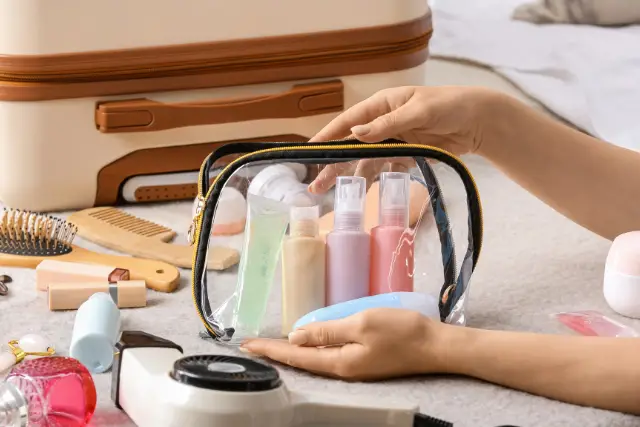
Flammable aerosols that are not toiletries can’t go in checked or carry-on bags. The FAA lists WD-40, spray paint, spray starch and cooking spray as examples. Tear gas, butane, propane and compressed gas cylinders are not aerosols under FAA rules, but they are banned inside checked luggage too.
Keep In Mind the Federal Aviation Administration Regulations
Aerosol cans inside your checked baggage must follow FAA regulations. You can bring them in limited quantities, and only the allowed types. According to the FAA, toiletry and medicinal aerosols are permitted within the size limits below.
A quick rule of thumb: if you spray the product on your body, it usually counts as a toiletry. If you spray it on things, it must be labeled nonflammable to fly.
Also, the nozzle or button must be protected with a cap or other means so it cannot spray inside the luggage. An unprotected can may be removed if screeners find it.
Size Related Rules
The size regulations are applicable for both international and domestic flights. And it definitely refers to the checked bag regulation; not for your carry-on bag or luggage when one is trying to bring aerosol cans.
When bringing any medicinal or toiletry aerosol inside your luggage, ensure each container is no more than 500 ml (17 fl oz) or 0.5 kg (18 oz). The total of all these products, including any nonflammable aerosols, should not exceed 2 liters (68 fl oz) or 2 kg (70 oz).
And this is the permissible quantity for each person. So don’t confuse it for a per-checked bag rule. For example, you can carry 4 cans of 500 ml aerosol products for a total of 2 liters.
Toiletry aerosols of 3.4 ounces (100 ml) or less can go in your carry-on, inside your quart-size liquids bag. Anything larger must go in checked luggage.
When Packing the Aerosol Cans Inside Checked Baggage
When packing the aerosol products, pay extra attention to its lid. Make sure it does not come off. As if the cap somehow manages or escapes its can and gets inside your luggage, the bag handler may believe it’s a product that does not have a lid. And in such a case, the officer may simply toss that can away.
To make sure the can does not leak or explode, you should also prevent it from rattling around your luggage. Pack aerosol cans securely since there’s a chance of denting that can lead to piercing them. Make sure the cans won’t move, so pack aerosol cans in the most secure way.
And finally, make sure there are no flammable liquids next to it. After reading all of the previous points, this tip is now a no-brainer. Avoid cramming or rushing so you won’t miss any safety details. Never pack any flammable items such as lighter or matches close to your aerosol items.
5 Things That You Should NEVER Put in Your Checked Luggage
Wrap Up
Aerosol cans may explode in checked luggage only when you don’t pay enough attention to packing it properly and finding more about the safe ways to pack it inside your baggage.
Hopefully, now that’s not going to be the case. As I tried my best to keep this whole guide complete with the information, you should now be knowledgeable enough when considering bringing aerosol cans inside your checked items. Have a Safe Flight!
Sources
- PackSafe: Aerosols, Federal Aviation Administration
- PackSafe: Sprays and Repellents, Federal Aviation Administration