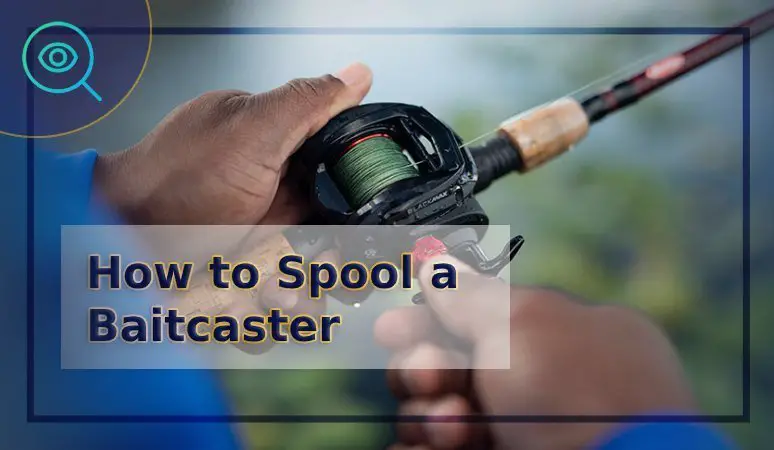
How to Spool a Baitcaster with Different Types of Lines?
Contents
Casting with a baitcasting reel without any backlashing is often considered to be pretty hard for novices. However, when it comes to spooling line on one of these, the thing becomes simpler than spinning or spin-cast reels.
Of course, there are some major parts that will directly influence your results. For example, line size and type. New anglers often get confused with sizing the line according to the situation and reel. And so, today let us have a complete discussion on how to spool a baitcaster.
How to Spool a Baitcaster For Monofilament, Fluorocarbon & Braid Lines.
Here’s a simple consideration you should know about. If you are spooling, let say a twenty-pound test on your reel, the thicker lines are what you should be going for. And that also means you will need less line to fill the spool up compared to a 10-pound test where thin spooling will happen.
This type of decision-making skill is really important to witness success with certain fishing techniques. Let’s talk about two ways of *spooling a reel *. One for monofilament and fluorocarbon lines. While the other one discusses the process when braid line is being used.
Spooling Method for Monofilament / Fluorocarbon Line
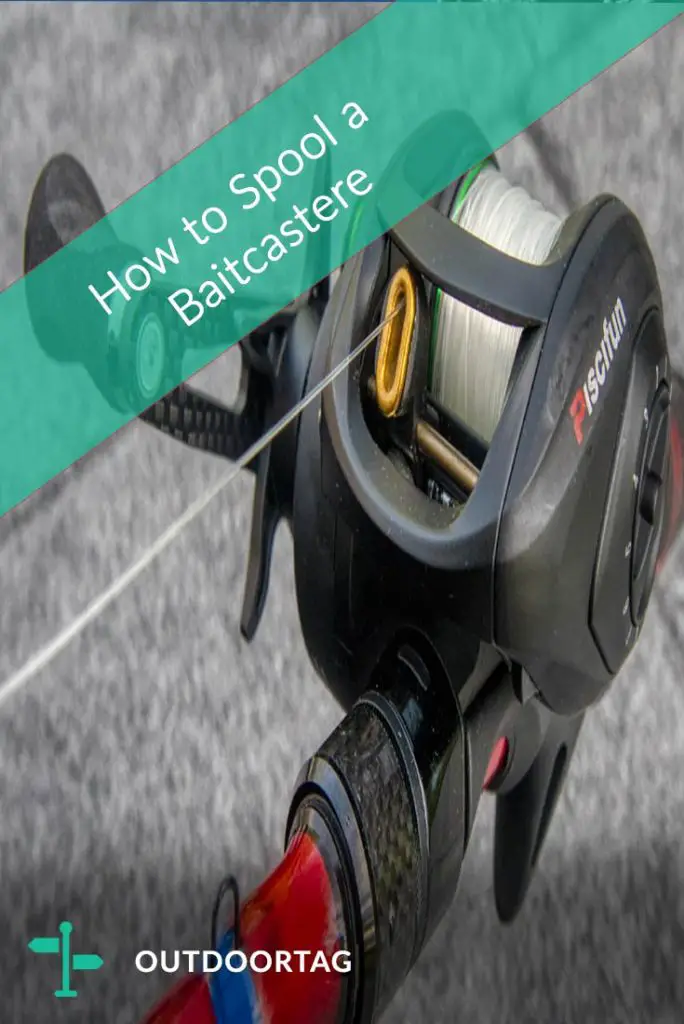
It’s important to consider some characteristics of this line class. That way spooling up will become even clearer to the beginners. Fluorocarbon in particular is stiffer and has more memory than mono, so it pays to spool it slowly and under steady tension. With a casting reel, the line should come off the filler spool in the same direction the reel spool turns, usually off the top. A simple way is to run a pencil through the filler spool so it turns like a wheel, which keeps the line's natural curl working with the reel instead of against it. Bring your casting rod and fasten the reel onto the seat. Now you are good to go with the following method.
The line’s tag end should come from spool that you just selected. You need to guide this line through the rod’s eyelets carefully. Now your casting reel should have some line guide or level wind. You need to run the tag end through this part. In some cases, the line guides come with very small holes. And in such a situation, you need to be even careful with feeding the line properly through guide. Or else there’s a chance that the line won’t spool easily.
As soon as the line comes through the guide, wrap it around the spool and tie it on with an arbor knot, which is built from two overhand knots. Next, you need to synch this line while keeping it against the spool. Cut the tag end while keeping line snug nicely with spool.
You want to have a friend who can stand at some distance at this point. The feeder spool’s top should be dangling line as well. Start reeling in this setup. You want to keep the line between your thumb and index finger. Use your free hand here. So that the line can lay onto spool in an even and tight manner.
Now keep reeling until the spool is nearly full. Stop when the line is about 1/8 inch below the edge of the spool, which is where Missouri's Department of Conservation says a reel is full.
Spooling Method for Braided Fishing Line
The braided fishing line is a very popular option for experts and also novices. It has almost no stretch and a very high strength for its thin diameter. But braid is slick, so it can spin on a bare spool instead of gripping it. And so, it’s important to use some monofilament backing first and then go for a braided line for spooling the reel.
The braided fishing line has little memory, so it doesn't fight the spool the way stiffer lines can. Here also, you need to mount and fasten the reel to the rod first.
First, you want to start with the backing part. So simply feed the monofilament line through guide. Next, carefully tie it with the spool. Wind on enough mono to cover the spool in a clean, even layer. The mono gives the braid something to grip, so it won't slip on the spool.
Now its time to combine the mono and braided lines. Use a double uni knot to connect both braid and monofilament by grabbing them tightly. This should make your lines pretty solidly conjoined.
Next, you need to start with spooling the braided line onto reel. Just make sure you are leaving somewhat 1/8th inch right before the lip of spool. And you are all set up with the thing.
Things to Keep in Mind:
- Make sure you are not overfilling the spool. This will allow better spinning to result in increased efficiency and your chances to cast better.
- Depending on weight of lure, you need to think more about matching the rod. This can really make a change with baitcasting and controlling it.
- You should line up the line guide properly to avoid any sort of added friction when casting to get better results.
- Wind braid on under firm tension so it packs tightly; loose braid can dig into itself on a hard cast or a strong fish.
Conclusion
Now you have your newest spool of line to enjoy the adventure along the water. When you are new with a baitcasting reel, the only piece of advice that works is, it’s hard and you’ll have to get used to it.
Hopefully, you have a clear concept of how to spool a baitcaster. Through proper spooling, you will be able to ignore problems such as backlash, line twists, and other similar dilemmas. And those are the worst things that can take place whenever you’re in the middle of the action with fishes biting.
Sources
- An Introduction to Fishing, Missouri Department of Conservation
- Benefits of Fluorocarbon Lines for Clear Water, Berkley Fishing