How to Tell if a Compound Bow is Left or Right Handed?
Contents
- How to Tell of a Compound Bow is Left or Right Handed to Pick Better.
- Determining the Compound Bow’s Hand Orientation Through Its Part’s Location.
- Bow Design Difference Can Help Too.
- The Background Story for Understanding Which One You Need.
- Your Draw Hand Plays Important Role.
- Using Your Eye Dominance.
- Now Sometimes Your Dominant Eye Does Not Match Your Dominant Hand.
- Wrap Up
- Sources
Buying a compound bow may seem very easy to say and think about. But the whole thing is not that simple. You need to understand more than just a few factors for actually getting suitable and worth the money pick for yourself. One matter that hugely involves with the right selection of compound bow is hand orientations.
There are different ones that can make you somewhat not sure about which one will work for your bowing case. And so, let’s find out more about this whole hand orientation stuff plus how to tell if a compound bow is left or right handed.
How to Tell of a Compound Bow is Left or Right Handed to Pick Better.
There is more than just one way to decide this orientation thing. Let’s start with how you can actually determine the orientation as well as a basic background story to help in choosing proper one. Keep on Reading…
Determining the Compound Bow’s Hand Orientation Through Its Part’s Location.
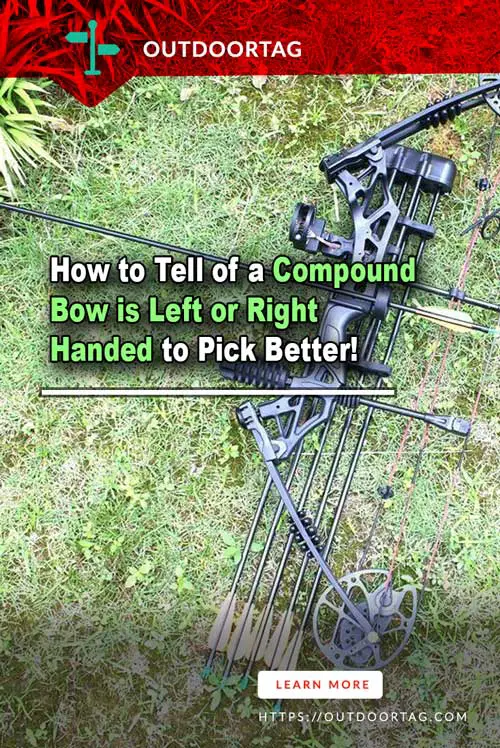
The first thing that you should check for is position of sight in a bow. If you can see the sight sitting on right side, then it’s a left-handed compound bow. While bows that have a sight on the left side are probably a right-handed compound bow. These sights are there for aiming needs. But you can also use its positioning for determining the bow’s hand orientation.
Another thing that helps is the sight window, the cut-out part of the riser where the arrow passes. If the shelf and sight window are on the right side of the riser as you hold it, it’s left-handed. While if they sit on the left side, then it is a right-handed compound bow.
The arrow rest of bow can also help you. Once you draw bow, this part holds the end of an arrow. If you can see the arrow rest is on right side, then that bow is a left-handed one. On the other hand, a left side located arrow rest refers to a right-handed bow.
Bow Design Difference Can Help Too.
There are some noticeable physical signs that help you to understand that a compound bow is suitable for a certain hand dominant person. For example, arrow rests are mounted for one hand, so the side the rest sits on tells you the same thing as the sight window. The design difference actually makes sense once you get to use bow.
Suppose you are using a left-handed bow. Then probably your left hand will work on drawing the arrow back. This keeps the arrow on the side of the riser away from your drawing hand. That position is pretty obvious for you to tell if the bow is suitable for a righty or lefty archer.
The Background Story for Understanding Which One You Need.
Archers often think that their dominating hand is what decides for the gear. But the dominant eye matters just as much, because it’s the eye you aim with. This means if you are someone with right eye dominance, then getting a right-handed bow will work best for your case. And similarly, in the case of left eye dominance, you need left-handed bow for proper shooting.
Also, for those who are total beginners, you may think a left-handed bow means the one that you’ll hold with your left hand. Nope, that’s not the case! Actually, the matter is that you hold left-handed bow in your right hand. So that the string can be drawn with your left hand.
Your Draw Hand Plays Important Role.
This whole matter has a lot to do with your dominant hand being draw hand too. You need to start by holding the bow in question with your non-dominant hand. Now if you are a righty, then that’s your left hand. And vice versa for lefties.
Now when you draw the string to back, you’ll do it with your dominant hand. The one that is non-dominant will work for holding bow steady and in position. And dominant one works for actually drawing an arrow back doing the main job.
If the bow you’re holding agrees to this scheme then it’s the compatible one for you. If you can draw the string with your right hand, then compound bow is right-handed. And the opposite is true for left-handed compound bows.
Using Your Eye Dominance.
Your eye dominance can also help you find proper handed compound bow for you. Like I said before, it’s a very important factor in choosing whether you need a right- or left-handed compound bow. Your dominant eye is basically the one that relays visual information, such as target location, more accurately.
Most people are right-eye dominant, and most people’s dominant eye matches their dominant hand. If you don’t know which one is your dominant eye, then think about peeping through a telescope or microscope. Which eye would you prefer to use for such needs? That’s your dominant eye.
Some people also do the Porta test. For this, you need to do the thumbs-up gesture. Then, with both eyes open, hold your thumb at arm’s length over a distant object. Then close your left eye. Does the thumb seem centering with an object? Then you are a right eye dominant person. While the opposite thing happens as you close your right eye, then you’re probably a left-eye dominant person.
Now Sometimes Your Dominant Eye Does Not Match Your Dominant Hand.
And that condition is known as cross dominant. It’s common: one study cited by Archery 360 found that 26% of people are cross-dominant.
Many cross-dominant archers choose a bow that matches their dominant eye and train their other hand to draw. Others shoot with their dominant hand and close or cover the dominant eye while aiming. Try both setups at an archery shop to see which feels better.
Whichever you choose, your aiming eye should line up with the bowstring and arrow shaft. If you don’t agree to follow your eye dominance matter, then you’ll need to adjust the horizontal point for aiming.
You do so to cope up with the difference, and that’s going to result in poor performance. As then you’ll need to keep on making tiny adjustments by moving it left or right.
Outdoor Speak: Since we’re in the dominant eye subject, why not continue reading to learn how to equip your bow with a special accessory: How To Install A Peep Sight.
Wrap Up
Often those who need information on how to know a compound bow is left or right-handed are actually not sure about which one to select for themselves. Hopefully, this guide was enough informative for you to determine the answer to both questions. See You Soon on Some New Topic!
Sources
- Should I Shoot a Right- or Left-Handed Bow?, Archery 360
- Archer’s Choice: Go Left or Right?, Archery 360