Why Avoid Dumping Black Water Tank on Ground –Alternative?
Contents
The thought of where all human waste goes is definitely not something anybody would enjoy. And that must be one of the reasons why people love to enjoy their campground trips with RVing. Since this does not include any regular car travel or tent camping hassle where a rancid pit toilet is all you’ve got. One of the majorly critical parts of RV has to be the black water tank. This is where all the water waste of toilet resides under rig. And to make sure your black water tank of RV is working fine, there’s no alternative to proper functioning as well as waste whisking away.
There are quite a few things that you should be aware of regarding this issue. But probably the most crucial one is about dumping black water tank on ground. Is it actually safe to do so and if not, then what convenient alternative method should you be looking forward to? Let’s talk about that especially today…
What You Need to Know About Dumping Black Water Tank on Ground
The black water tank is in charge of collecting not just wastewater but also solids. It also gathers toilet paper that is by the way RV-specified ones of course. The plumbing system is quite sensitive since if you don’t go with degradable and clog-free stuffs, things can mess up pretty soon. RV users must know more about the disposal of waste.
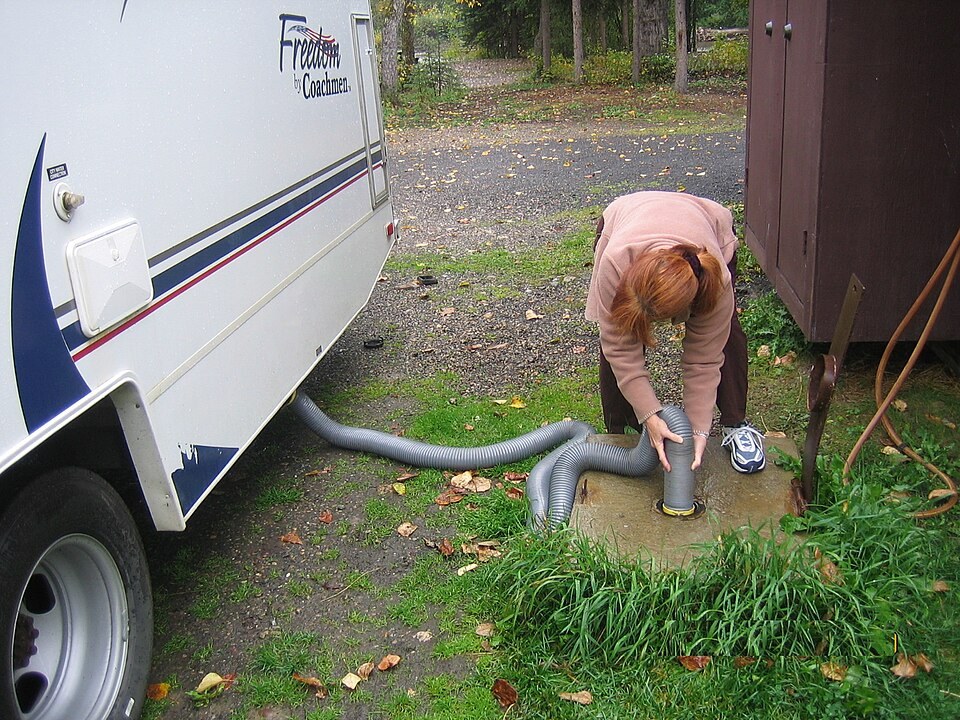
Photo by Mandruss, CC BY-SA 3.0, via Wikimedia Commons
A Good Thumb of Rule to Follow.
A black tank might seem like an intimidating thing to handle or manage. But to honest, it’s not very hard if you know the right methods. Often intimidating feelings come from the idea of dumping it wrong way. One thing you should never do is dump it on the ground or into a street storm drain. Raw sewage spreads bacteria and can wash into streams and groundwater. You should also never use national forests and parks as a place to dump such waste.
Federal rules are clear on this. National Park Service regulations ban draining refuse from a trailer or other vehicle except in facilities provided for that purpose, and Forest Service rules require sewage and waste water to be hauled out or left only in receptacles or places provided for it. State and local rules apply on top of these, so check them where you camp.
You should dump it only at an RV dump station or a campground sewer hookup that is specifically designed for such things. Also, try to shut off the valves until it is completely filled. Or at least wait till nearly full. This will help since the gravity would work in your favor. The right way of dumping is actually a whole process and next, I’ll be talking about that. Once you get the idea, it won’t take time to become a pro in this matter.
Things to Grab for Proper Dumping.
First of all, you need to keep your skin away from contacting any human waste for sure. So, some disposable gloves are a must. The next thing is an RV sewer hose that can fit properly. Also, get a clear elbow attachment. Usually, it helps in ensuring if your tank is actually clean, this may feel gross to look at but undoubtedly is helpful.
You will also require a garden hose. Make sure you are not bringing your regular drinking water hose here. This isn’t meant to come in contact with the black tank. Buy a separate one or else you’ll surely get sick.
The area needs to be sanitized and disinfected after all this dumping is done. So, bring some disinfecting wipes, spray, and paper towels. And finally, to store the RV waste hose separately, you will need a bag or plastic bin.
Dumping the Black Water Tank
First, you need to drive your RV to the dump station. Then the holes in ground that you can see needs to be in alignment with sewer valves. There’s no need of stretching for hose here while dumping. You also want to put on your gloves at this point.
Attach the clear elbow attachment to RV. Get the sewer hose out from storage. Fix it with the dump valve of RV. It needs to attach properly here. There should be a right adaptor attaching along so that there’s a proper connection with the sewer dump hole.
Now you want to attach the other end with dump hole. So that once the dumping begins, it does not come off loosely. Open the valve and this will initiate dumping process. Working in a mannerly order is very critical here. The black tank needs to be handled first in most of cases.
Once you ensure the black tank is completely empty, run a little bit of water. This will make sure it flushed out everything properly. Then you can close the valve for black tank. After that you can open the valve for grey tank and let wash black water waste out.
Run some water once again for flushing. Turn off the grey valve and detach hose. Let it rest on the ground for now. You want to use a nearby water spigot to give the rest of hose a good rinse.
Finally, you can dump all fluid out of spot into the hole of dumping station. Then put it back into the storage container. Finish off the process by sanitizing RV dumping valve. Also, disinfect the surroundings properly.
Watch This!
Conclusion
And that was about dumping black water tank on ground. The details of the rules vary by state and land agency, but dumping raw sewage on the ground isn't allowed on federal public lands, and it isn't something you should do anywhere. Besides the legal risk, it harms the environment and spreads disease.
If you're boondocking far from services, look for a dump station on your route, or use a portable waste tank to carry the waste to an approved station.
Now you know the whole story and what your steps in this matter should be. Your trips are going to be convenient and the chores won’t feel hard to manage, hopefully. Have a Great Time!
Sources
- 36 CFR 2.14, Sanitation and refuse (National Park Service), Legal Information Institute, Cornell Law School
- 36 CFR 261.11, Sanitation (Forest Service), Legal Information Institute, Cornell Law School